An Unexpected Harvest
Wednesday, October 14, 2026
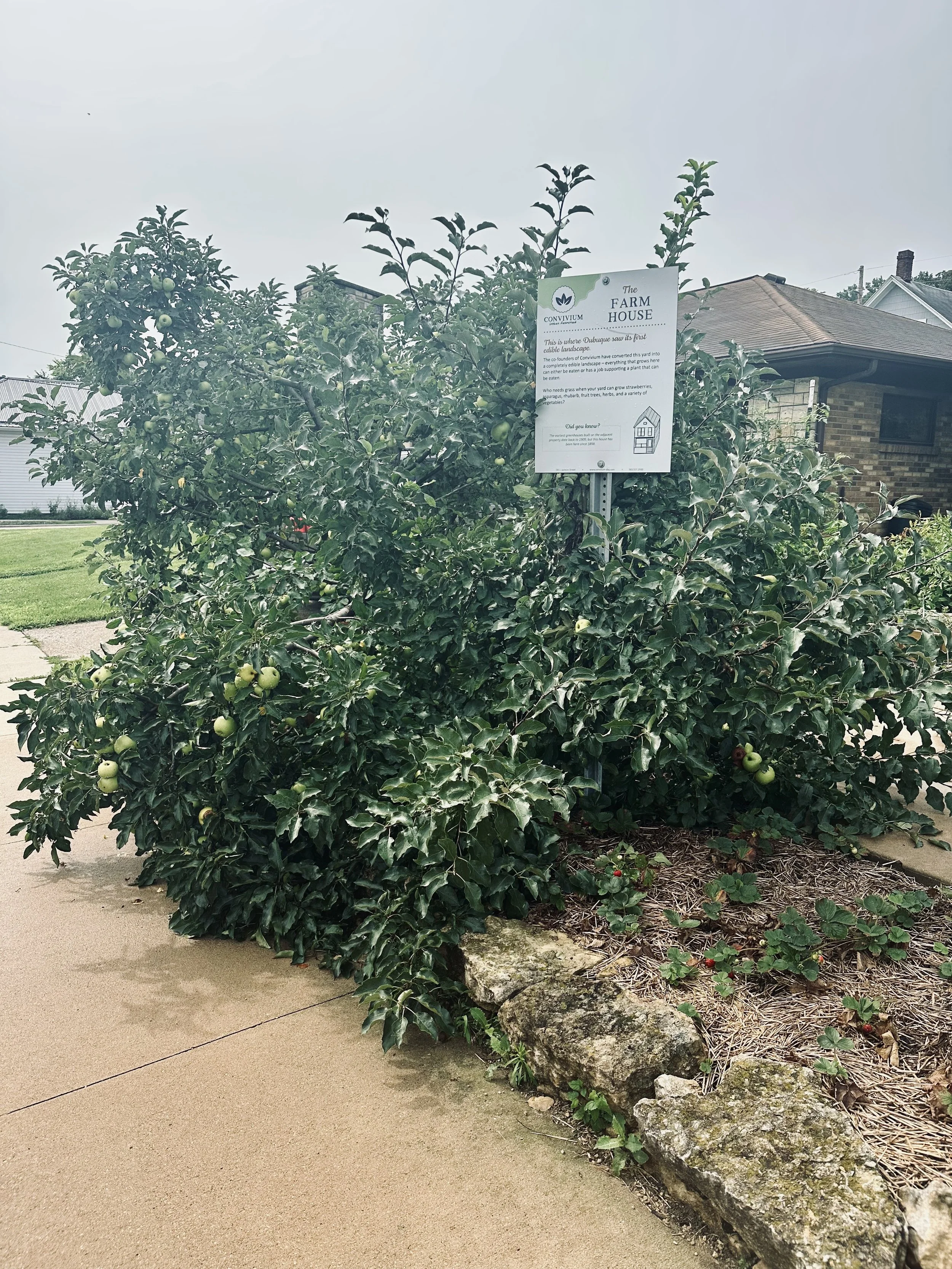
I have three fruit trees in my yard—an apple, a peach, and a cherry. For the past ten years, A.J. has been dutifully and skillfully pruning these trees to encourage as much fruit production as possible. This summer, we became victims of our own success.
The beautiful dwarf apple tree planted along the front sidewalk split in half under the weight of its own fruit. I woke up one morning to find half the tree lying on the sidewalk.
(Yes, yes…we should have thinned the fruit. Next time!)
The good news: Half the tree was still standing. The bad news: We now had a pile of apples that, without a plan, were likely to go to waste.
That's when I remembered reading something about making pectin from green apples. Pectin is a naturally occurring substance in fruit that helps jams and jellies thicken as they cook. We typically purchase commercial pectin for the jams and jellies we sell in our gift shop, but here was an opportunity to try making our own from the nearly 100 pounds of unripe apples that might otherwise have gone to waste.
I found a recipe and asked Cena Sharp, our culinary resource director, to give it a shot.
The process began with chopping the apples and removing the cores and any blemishes. Cena cooked them down until they were soft and golden. Next came the challenge of extracting the pectin-rich juice. She started with a food mill, as the recipe suggested, but eventually found that a juicer worked better.
The result was a thick, white, nearly tasteless paste with the consistency of honey. This was our homemade pectin!
In a commercial setting, the next step would be to dehydrate the paste into a powder for packaging. We skipped that step and went straight to experimenting. Cena used some of the pectin to make a test batch of rhubarb jam.
It worked!
We had to cook the jam considerably longer than we would have with commercial pectin, but the homemade version did the job. We froze the excess, and Cena is already looking forward to experimenting with it in other ways—as a glaze for meats or even as a gluten-free thickener for soups.
What began as a minor gardening tragedy turned into an opportunity to experiment, learn something new, and discover another way to make use of what we have.
I think gardening is a pretty good analogy for life. We make plans, put in the work, and do our best to create the conditions for things to flourish. But so much is beyond our control. Trees split. Crops fail. Things don't always turn out the way we imagined.
We can spend our energy lamenting what went wrong, or we can take a closer look at what's left and ask ourselves what might still be possible.
Sometimes, the unexpected doesn't just ask us to find a workaround. It opens the door to something new—something we might never have tried if everything had gone according to plan.
At Convivium, we talk a lot about growing, cooking, and eating. But perhaps one of the most important lessons in all three is learning to work with what we have, to stay curious, and to remain open to possibility.
Yours convivially,