A Little Patience, a Lot of Bread
Tuesday, October 21, 2026
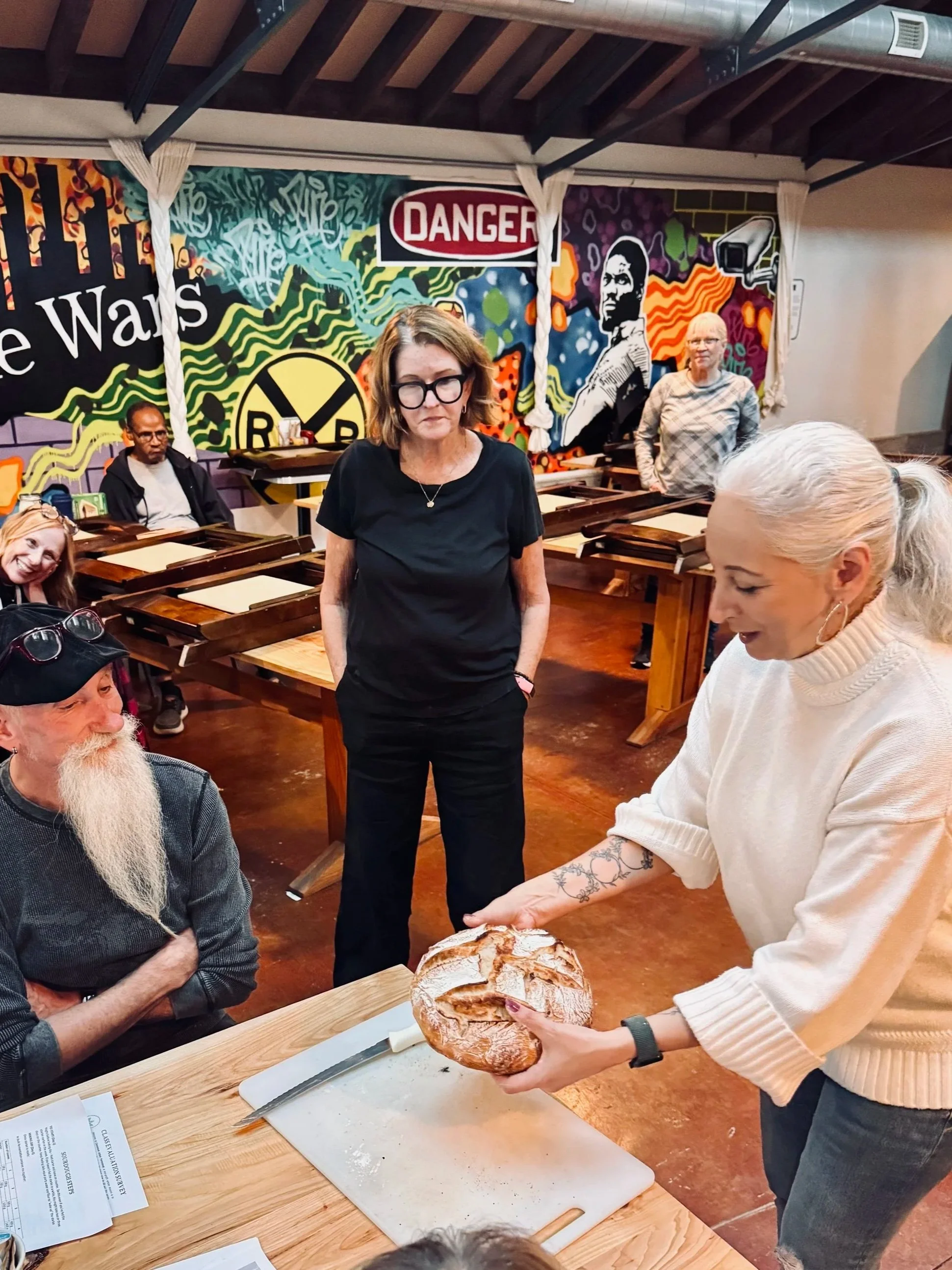
This past Sunday, I taught a sourdough bread-baking class here at Convivium. It’s one of the most popular classes I teach, and it was a fun afternoon spent with curious, engaged people.
Since the pandemic, there has been a resurgence of interest in sourdough bread baking. Part of the appeal was practical: sourdough doesn’t require the addition of commercial yeast, which many of us worried we might run out of—right along with toilet paper, of course! And baking sourdough involves a few steps that were easier to fit into life when so many of us were spending more time at home.
I was one of those people who decided I wanted to bake sourdough bread. Except, as it turned out, I didn’t really want to bake sourdough bread. I wanted the idea of baking sourdough bread.
I wasn’t very good at keeping up with the process, and it was trickier than I expected. The first few loaves came out dense and hard, and I didn’t know how to troubleshoot them. So I quietly abandoned the hobby.
I suspect I wasn’t the only one.
Getting to the point where I was able to teach a class on the subject has been a bit of a journey for me.
Here’s the thing: I have many strengths. Patience is not one of them. And sourdough asks for patience. It doesn’t happen overnight. With an active starter, the process can take two or three days; if your starter needs a little attention first, it can take longer.
Sourdough relies on a “starter”—a living culture of wild yeast and bacteria—instead of added commercial yeast. The starter needs occasional feeding to keep it active, and that’s where some people get intimidated. I’ve heard stories of people traveling with their starter or paying bakeries to babysit it while they’re away.
Folks, I’ve gone many months without feeding my starter, and I’m here to tell you that I still bake some pretty amazing loaves of bread. No constant worrying about feeding schedules required!
About three years ago, I decided to give sourdough another try. I had some starter from an acquaintance that had been sitting in the far recesses of my refrigerator for…a year, maybe? Don’t judge.
I looked up how to revive an old starter and promised myself I’d stick with it. I began feeding it rye flour. I also went one step further and experimented with wild yeast from the grapes growing on my deck. You know that dusty film on grapes? It can contain wild yeast. I picked a few grapes, swished them around in water, and used that water to feed my starter.
Do I know whether it helped? Absolutely not. But I’m going to pretend it did.
After many days of feeding and refreshing the starter, it was active enough to bake with. I found a great recipe and a process that fit my actual life, and I’ve been making tasty, rustic loaves ever since.
I’m proud of that. Not just because I learned to bake good bread, but because I stuck with something that didn’t come naturally to me. I had to practice. I had to be patient.
And that’s what I keep thinking about. We sometimes treat patience as if it’s a personality trait: you either have it or you don’t. But maybe patience, like baking bread, is a skill we can develop.
We start out uncertain. We follow the instructions closely, worry about getting things right, make mistakes, and sometimes give up. But if we come back to it, we begin to learn. We develop a feel for the process. We figure out what matters, what can be adjusted, and when we can relax and trust ourselves.
And perhaps the best part is that we can learn more than the skill itself. We can learn patience. We can learn to be comfortable with uncertainty. We can learn that a disappointing first attempt doesn't mean we're incapable of succeeding.
So if you've been thinking about trying something new, I hope you'll give it a go. You might surprise yourself.
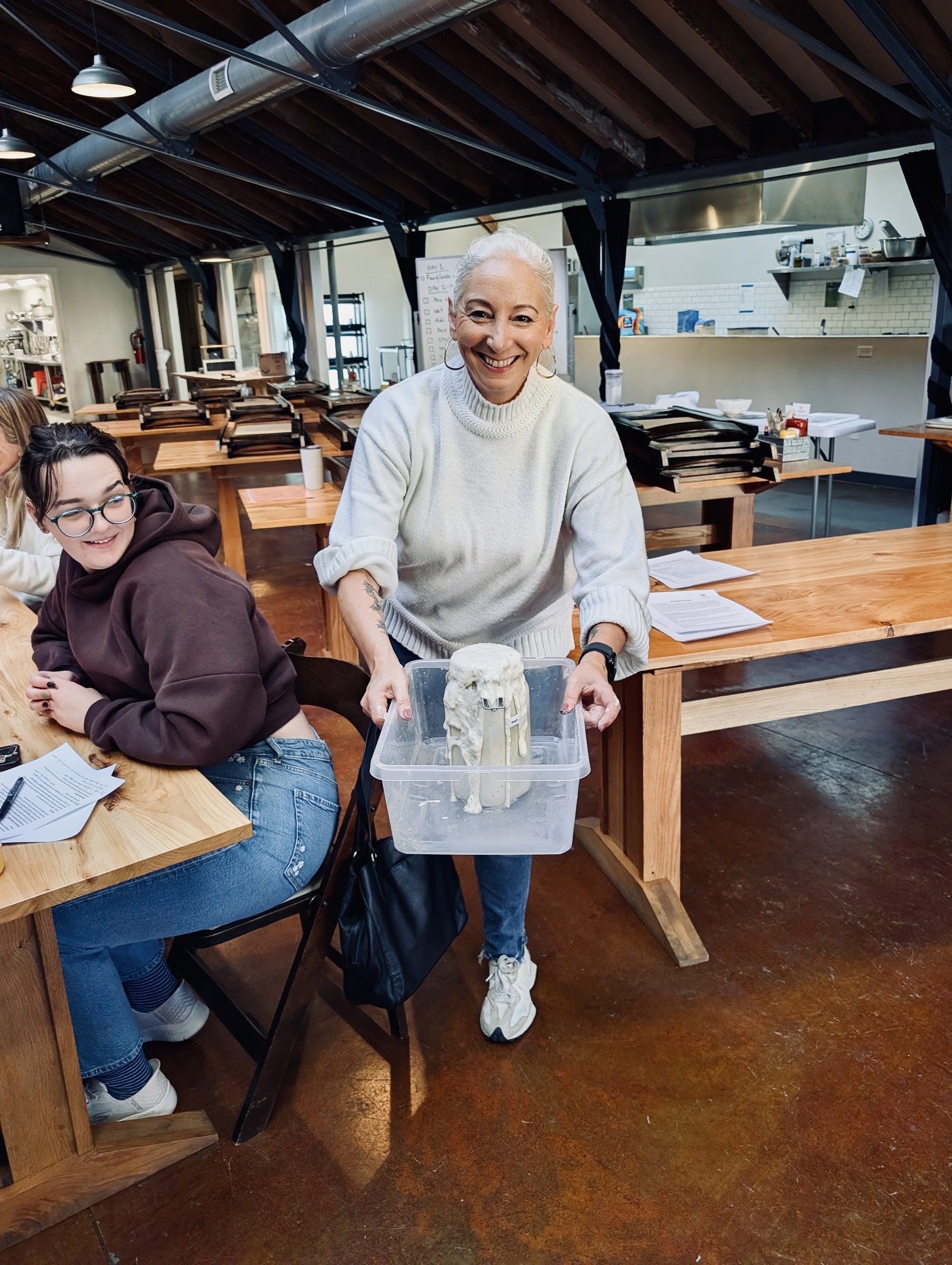
My Sourdough Method
This is the simple routine that works for me. Sourdough timing can vary depending on the temperature of your kitchen and the activity of your starter, so think of the times as a guide rather than a strict deadline.
Before baking: Wake up your starter
The night before mixing the dough, feed your starter and leave it on the counter.
If it hasn't been fed in a while, it may need a few days of daily feeding before it becomes bubbly and active again. Feed with equal weights of starter, water, and all-purpose flour, discarding some starter as needed to keep the amount manageable. Use it when it is showing good activity – it’s bubbly and jiggly.
Mixing day
In a large container, combine:
100 g active sourdough starter
350 g warm water
Mix and let rest for 30 minutes.
Then add:
500 g bread flour
10 g salt
Stir until everything is combined. You'll have a shaggy dough.
Let the dough rest for 30 minutes. Then stretch and fold it four times, waiting 30 minutes between each round.
After the final stretch and fold, let the dough rest in a draft-free spot for about 8–10 hours, or until it has risen. The timing will depend on your kitchen temperature and your starter.
Shape and bake
Gently shape the dough into a boule (a round loaf) and place it in a proofing basket or a bowl lined with a well-floured towel. Let it rest on the counter for about 2 hours, or refrigerate it overnight.
Preheat your oven to 500°F with a Dutch oven inside.
When the oven is hot, carefully remove the Dutch oven. Transfer the loaf into it using parchment paper or a suitable baking sling, then score the top with a sharp blade.
Bake with the lid on for 20 minutes. Remove the lid and bake for another 11–12 minutes, until the crust is deeply browned.
Let the loaf cool completely before slicing. I know—that last part requires patience, too. But you've come this far.
Then enjoy!
Yours convivially,