The Art of Being Neighborly
Monday, June 1, 2026
Convivium is situated in a working-class neighborhood on Dubuque's North End. At the turn of the last century, these homes were occupied by families whose livelihoods came from the nearby meatpacking plant, millwork factories, and the John Deere factory. They were blue-collar workers whose labor helped build not only this neighborhood, but much of the economic foundation of our community.
Like many industrial neighborhoods, the North End has changed over time. During Dubuque's economic downturn in the 1970s and 1980s, many longtime residents moved away and many homes became rentals. Over the years, the neighborhood developed a reputation as the "wrong side of the tracks." Even today, some people are hesitant to visit.
When we purchased the greenhouses that would eventually become Convivium, we also bought the house next door. I've lived there since 2015, and I can tell you this: I love this neighborhood.
It's vibrant and alive. Sometimes that's a little gritty. Sometimes it's joyful. It's filled with kids riding bikes, corner bars, young families, and older residents who have spent their entire lives here. The houses sit close together. The yards are small. People see each other. And honestly, I like that.
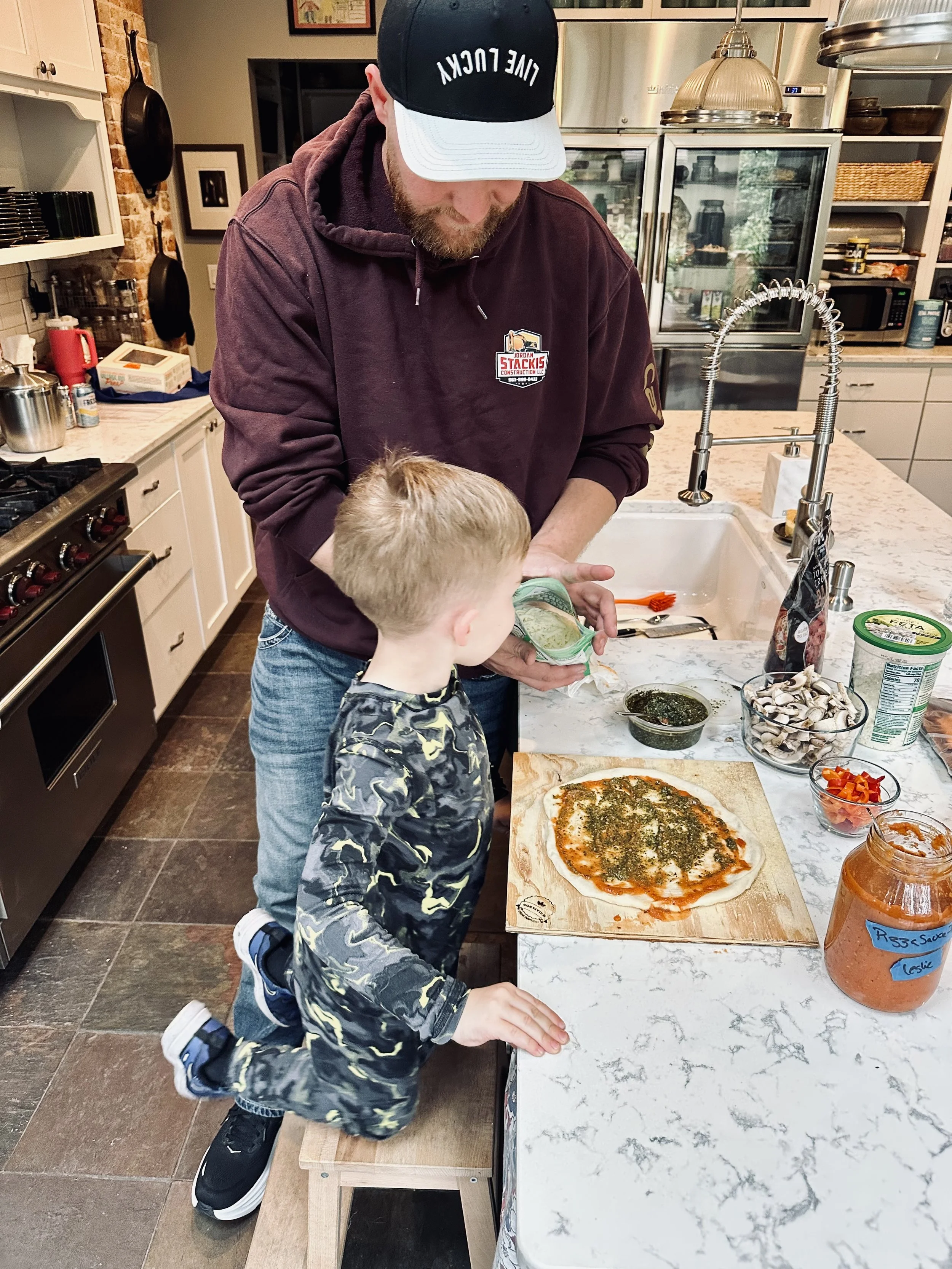
Recently, I invited one of my neighbors—Joe—and his four-year-old son over for dinner. We met through Convivium, but beyond that, we don't have much in common on paper. Different ages, different backgrounds, different life experiences. But, what we do share is our neighborhood.
And a love of pizza -- so we made pizza from scratch and baked it on my grill.
The evening reminded me that sometimes the only thing neighbors have in common is geography. But perhaps that's enough. In a world that increasingly encourages us to sort ourselves into groups of like-minded people, neighbors offer something different. They connect us to people we might never otherwise meet.
Being neighborly doesn't require grand gestures. It can be as simple as a conversation across the fence, a helping hand, or an invitation to share a meal. Food has a unique way of connecting people. After all, we all have to eat!
Ultimately, I believe the health of a neighborhood isn't measured by property values or appearances. It's measured by whether people know each other's names, look out for one another -- and occasionally -- share a meal. With that as a standard, the North End is a very wealthy part of town. Being neighborly is not complicated. It begins with the simple belief that the people living closest to us are worth knowing.
Yours convivially,