Tuesday, November 18, 2026
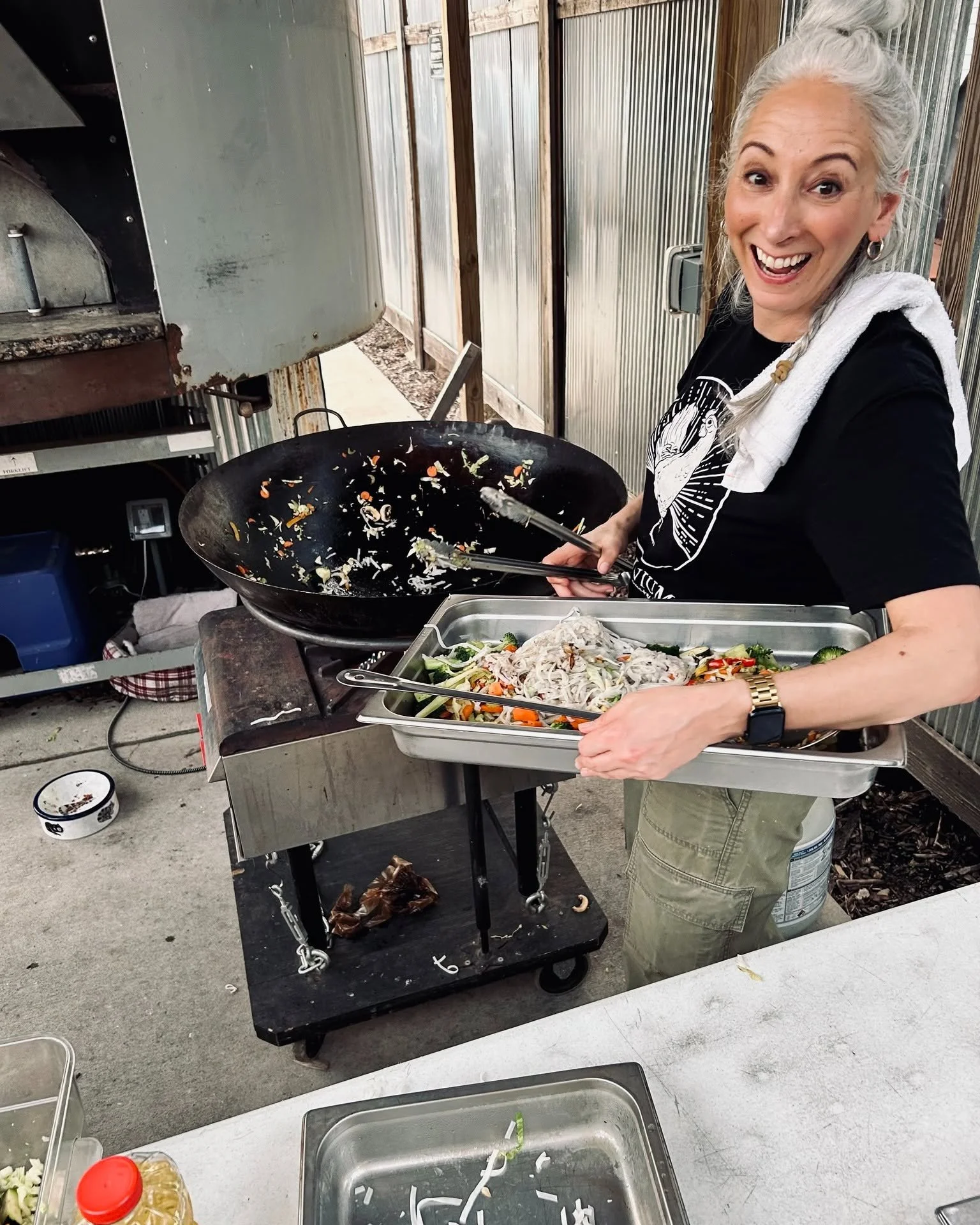
I teach a lot of the cooking classes here at Convivium. It's one of my favorite parts of the job. Inevitably, during those classes, someone asks, "Where did you learn how to cook?"
The answer? I taught myself.
I've been passionate about cooking (and eating!) from a very early age. Way back in the olden days, when cable television was only available to city folks, we had just two television channels in our rural Dane County, Wisconsin, childhood home: CBS and PBS. (Thank goodness The Dukes of Hazzard was on CBS, but I digress.)
Anyway, I watched A LOT of Julia Child on public television. Like, a lot. Something about watching her cook sparked an interest that has stayed with me ever since. I spent hours as a kid reading cookbooks and re-copying recipes. (Oh, how we spent our time in the pre-internet days!) I just loved it.
Ironically, despite my early fascination with cooking, I didn't spend much time actually cooking in my childhood home. I have enormous respect for my mother. She worked full-time as a teacher when I was growing up, and she had supper on the table every single night. That's no small feat. Cooking was another job at the end of a long workday, and the kitchen was her domain. It wasn't a place for kids to experiment or get underfoot. Mom cooked, and we stayed out of her way.
It wasn't until I graduated from college and had an apartment of my own that I started experimenting in the kitchen. And it's just evolved from there.
These days, I would probably be described as someone who lives in an "ingredient household." In other words, I don't keep a lot of processed, ready-to-eat foods in my pantry. Virtually all of the meals I eat are prepared by me. I go out to eat maybe once a week. And I don't cook every night, either. I'll cook a couple of times a week and happily eat leftovers in between.
I realize this is a little unusual. The Standard American Diet (appropriately abbreviated SAD) is largely characterized by an abundance of highly processed foods, refined grains, added sugars and unhealthy fats, with fewer whole, nutrient-dense foods than our bodies need.
I'm not here to wag a finger or judge anyone's food choices. We all have different circumstances, budgets, schedules and relationships with food. But I do think it's worth acknowledging that what we eat has a profound effect on our health and well-being.
And I don't believe healthy eating needs to be an all-or-nothing proposition. I eat processed food. I eat fast food. I eat sugar. All of it! But not every day, and not as the primary source of my nutrition. I prefer to think in terms of "most of the time" foods and "sometimes" foods. I think that's a much healthier way to approach eating than labeling foods as good or bad or feeling guilty about enjoying something simply because it's not particularly nutritious.
For me, the real trick is feeling comfortable in the kitchen. Knowing how to prepare a few simple, delicious meals. Understanding ingredients. Being able to look in the refrigerator, see what's available and figure out what to make for dinner.
And that's one of the things we try to do here at Convivium: educate, inspire and empower people to take a more active role in their food lives.
Because knowing how to cook is about so much more than following a recipe. It's a life skill with benefits that reach well beyond the kitchen.
Cooking gives us greater control over our health. When we prepare our own meals, we have more say over the ingredients we use and the nourishment we get from them.
It helps us stretch our dollars. Knowing how to turn inexpensive, everyday ingredients into satisfying meals is an invaluable skill, particularly when household budgets are tight. And knowing how to use what we have rather than letting it go to waste is good for our pocketbooks and our planet.
Cooking brings people together. Preparing a meal for someone is an act of generosity and care. Food is at the center of so many of our traditions, celebrations and relationships. Sharing a meal is one of the simplest and most universal ways we connect with one another.
It gives us independence. Knowing how to feed ourselves well, and how to care for others through food, is empowering. It's a skill that serves us throughout our lives.
And finally, cooking can be an awful lot of fun! There's creativity in experimenting with ingredients, satisfaction in making something delicious, and a genuine sense of accomplishment in putting a good meal on the table.
I think that's worth learning.
Help Us Keep Cooking
And this brings me back to Convivium.
Teaching people to cook is just one part of what we do. We believe that a stronger connection to food — where it comes from, how it's prepared and the joy of sharing it — can improve our health, strengthen our communities and make our lives a little richer.
But making that happen takes people, time and resources. Growing, teaching, harvesting, cooking and sharing food requires a whole lot of hands and a whole lot of support.
That's why we recently launched Friends of Convivium — a way for people who believe in what we're doing to help make it possible.
By becoming a Friend, you're helping us do more than grow vegetables. You're supporting classes that teach people new skills, demonstrations that make the food cycle visible, volunteer experiences that bring people together, and programs like our Free Community Casserole Program that put good food on the tables of our neighbors.
In short, you're helping us continue our work to improve life through food.
We'd love to have you as a Friend.
Join Friends of Convivium Here
Yours convivially,