A Beautiful Partnership
Monday, May 4, 2026
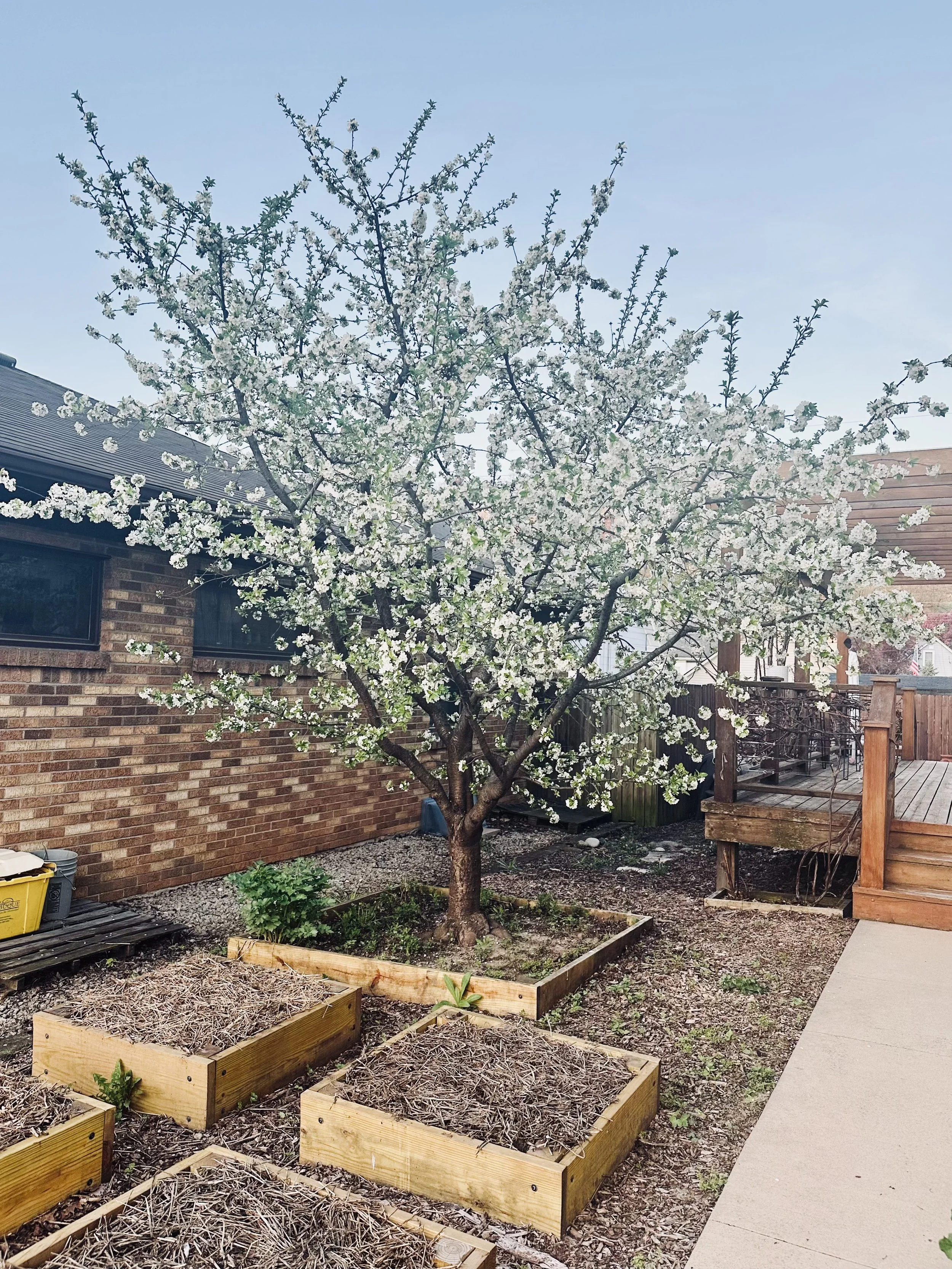
At the yellow farmhouse next door to Convivium, every inch of my small yard has a purpose and almost everything growing in it is edible. From early spring asparagus and tart rhubarb to summer raspberries, strawberries, and a rotating cast of vegetables in the raised beds, this space produces an abundance of food. My apple, peach, and beloved cherry tree add to the harvest, offering not only fruit, but something just as important: Blossoms that feed our bees.
Because this little part of our urban farm doesn’t exist in isolation. It’s part of a much larger, living system.
At Convivium, we care for an apiary of three to five hives. While the honey they produce is a sweet reward, the bees’ real work is far more significant. Bees will travel a remarkable three to five mile radius in search of nectar, pollen, plant resins, and water that they use to make honey in the hive. As they move through neighborhoods, gardens, parks, and wild spaces, they pollinate the plants that ultimately feed all of us.
In contrast to monocrop agricultural areas—where bees may have access to only a single type of plant for a short bloom period—urban environments often provide a diverse and continuous buffet of flowering plants throughout the growing season. This diversity supports healthier, more resilient bee populations.
Here at Convivium, the relationship is beautifully reciprocal. Our gardens feed the bees, and in return, the bees ensure that our fruit trees and vegetables can thrive and produce. It’s a quiet partnership, happening every day, often unnoticed, but essential to everything we grow.
In a small yard in the middle of the city, a much bigger story is unfolding—one of connection, cooperation, and the shared work of nourishment.
If you would like to learn more about our gardens and the bees, we are offering a bee tour on Thursday, May 21 at 1:00 pm. Click here for more information.
Yours convivially,